Keiko
A Pale View of HillsKeiko, Etsuko’s daughter and Niki’s sister, is defined in the family’s recollections by a painful contradiction: she lived under the same roof as her relatives yet withdrew from their company, and after her death her presence seemed to persist in the room she had left behind. Her suicide in Manchester gives that separation its terrible consequence. But the account does not make her death a simple explanation of who she was; it reveals instead how little her family felt able to understand, or even to speak about, her life.
Identity and Family
Etsuko recalls Keiko as pure Japanese, in contrast with Niki, and remembers that English newspapers seized on this distinction when reporting her death. Their accounts reduced the event to her Japanese identity and the fact that she had hanged herself in her room, treating her nationality as if it supplied all the explanation required. Etsuko objects to this simplification: the public description could name what happened, but it left out the family history and isolation that shaped the private memory of Keiko.
The distance between the sisters was not something Niki felt able to discuss openly. She says she did not tell anybody how she felt, partly because she was embarrassed and expected others not to understand. In her account, sisterhood carried an assumption of closeness that did not match her experience: she remembered Keiko as someone who used to make her miserable, while also acknowledging that she was sad when she heard of her death. Niki could not even remember what Keiko looked like by the time she spoke about her. Her grief is therefore neither an uncomplicated declaration of intimacy nor indifference; it holds together estrangement, old hurt, and sorrow.
Withdrawal at Home
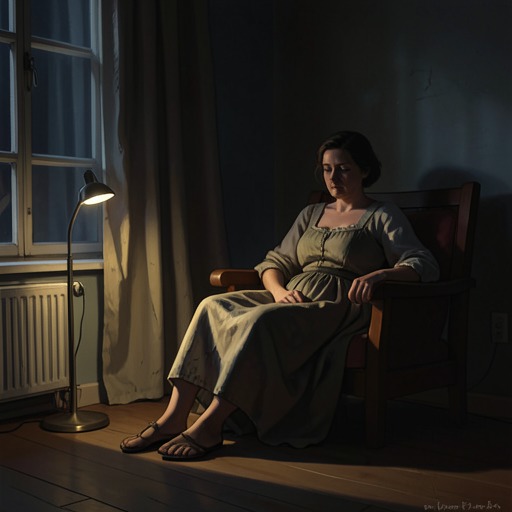
During the two or three years before she left the family home, Keiko increasingly shut herself away in her bedroom. She rarely came out, had no friends, and did not allow the rest of the family to enter. Etsuko surmised that Keiko spent her time reading magazines and listening to the radio, but presents this as an inference, not something Keiko explained to her. Even within the household, much of Keiko’s private life remained unseen.
Their contact narrowed to practical routines. Etsuko left Keiko’s meal in the kitchen; Keiko came down to collect it and returned to her room. The bedroom itself became a visible sign of the retreat: stale perfume and dirty linen came from inside, and Etsuko glimpsed glossy magazines scattered across the floor among heaps of clothes. She coaxed Keiko to put out her washing. At least in that small matter, they reached an arrangement: every few weeks Etsuko found a bag outside the door, washed the clothes, and returned them.
The family gradually adapted to Keiko’s seclusion, but adaptation did not produce ease or renewed closeness. When she did venture into the living room, her appearance there created tension; these visits usually ended in a fight with Niki or Etsuko’s husband, after which Keiko withdrew again. The pattern made her room both refuge and boundary. Its guardedness protected her from ordinary family access, while the rare crossings into shared space exposed how little the family knew how to meet her there.
Death and Its Circumstances
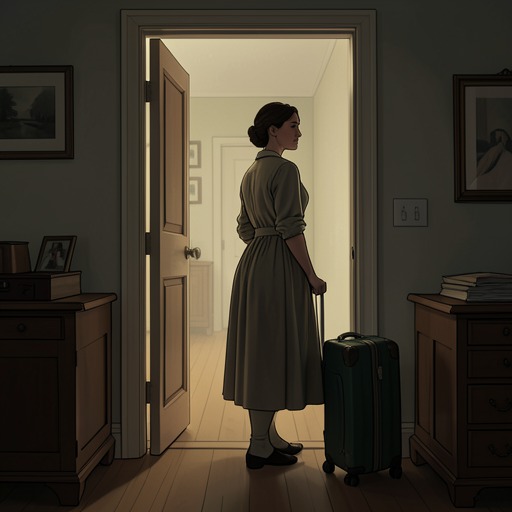
Keiko eventually left the family and lived in Manchester, where she died by suicide in her room. Etsuko had never seen that room. On learning of the death, her first thought, before she had fully registered the shock, was how long Keiko might have been there before anyone found her. The question joined the circumstances of the death to an earlier domestic reality: Keiko had already been able to live among her family without being seen for days at a time.
The coroner said that Keiko had been dead for several days. Her landlady opened the door because she thought Keiko had left without paying the rent. This detail gives the death a stark, practical context: in Manchester, where nobody knew her, discovery depended not on a relative noticing her absence but on a landlord’s concern about rent. Etsuko’s fear that Keiko might remain undiscovered was not merely retrospective speculation; the account of the landlady’s visit confirms the solitude she had dreaded.
Memory, Guilt, and the Room Left Behind
After Keiko’s death, Etsuko repeatedly pictured her hanging in the Manchester room. The image never lost its horror, though Etsuko says that she eventually grew intimate with it, as a person might with a wound on their own body. This is not presented as an end to grief. Rather, the repeated return of the image shows how the mind can become familiar with what remains unbearable, while the account still offers no access to Keiko’s own thoughts about her death.
The old bedroom in the family house also remained charged with her absence. Niki asks to use the spare room, and Etsuko outwardly responds coldly, though she has no real wish to prevent the change. She understands Niki’s discomfort: the room Keiko had guarded for so long still seems to hold a spell, stronger now that Keiko is dead. Six years after Keiko left it, that space continues to shape how the living move through the house. Early one morning, Etsuko wakes and glances instinctively toward Keiko’s door; she thinks she hears a small sound from inside, then realizes that the noises are coming from the kitchen. The moment locates grief in a bodily habit of attention, not in evidence that Keiko has returned.
The family’s late conversation about responsibility makes Etsuko’s sense of failure explicit. Niki says that Etsuko’s husband should have looked after Keiko more, since he mostly ignored her, though Etsuko answers that he was not Keiko’s real father. Etsuko remembers him as idealistic: he believed that the family could give Keiko a happy life after bringing her there. She then admits that she had known all along that Keiko would not be happy there, but decided to bring her anyway. Niki rejects the idea that her mother could have known, insisting that Etsuko did everything she could and was the last person anyone could blame. Etsuko remains silent. Her confession does not settle the question of responsibility; it sets her private certainty against Niki’s refusal to condemn her.
Keiko consequently occupies the narrative as more than the subject of a death reported in the newspapers. Her seclusion, the ordinary routines built around her locked door, Niki’s mixed recollections, and Etsuko’s recurring images make her absence the measure of what her family did not know. The remembered bedroom gives that absence a place in the house; the account of Manchester gives it a consequence that cannot be contained there. Etsuko’s final admission deepens rather than resolves the grief, leaving Keiko at the center of a family story still searching for language adequate to her isolation.